
The coating starts with what happens underneath it.
Maximum adhesion comes from sound concrete, mechanical preparation, clean pores and repairs that have been ground flush.
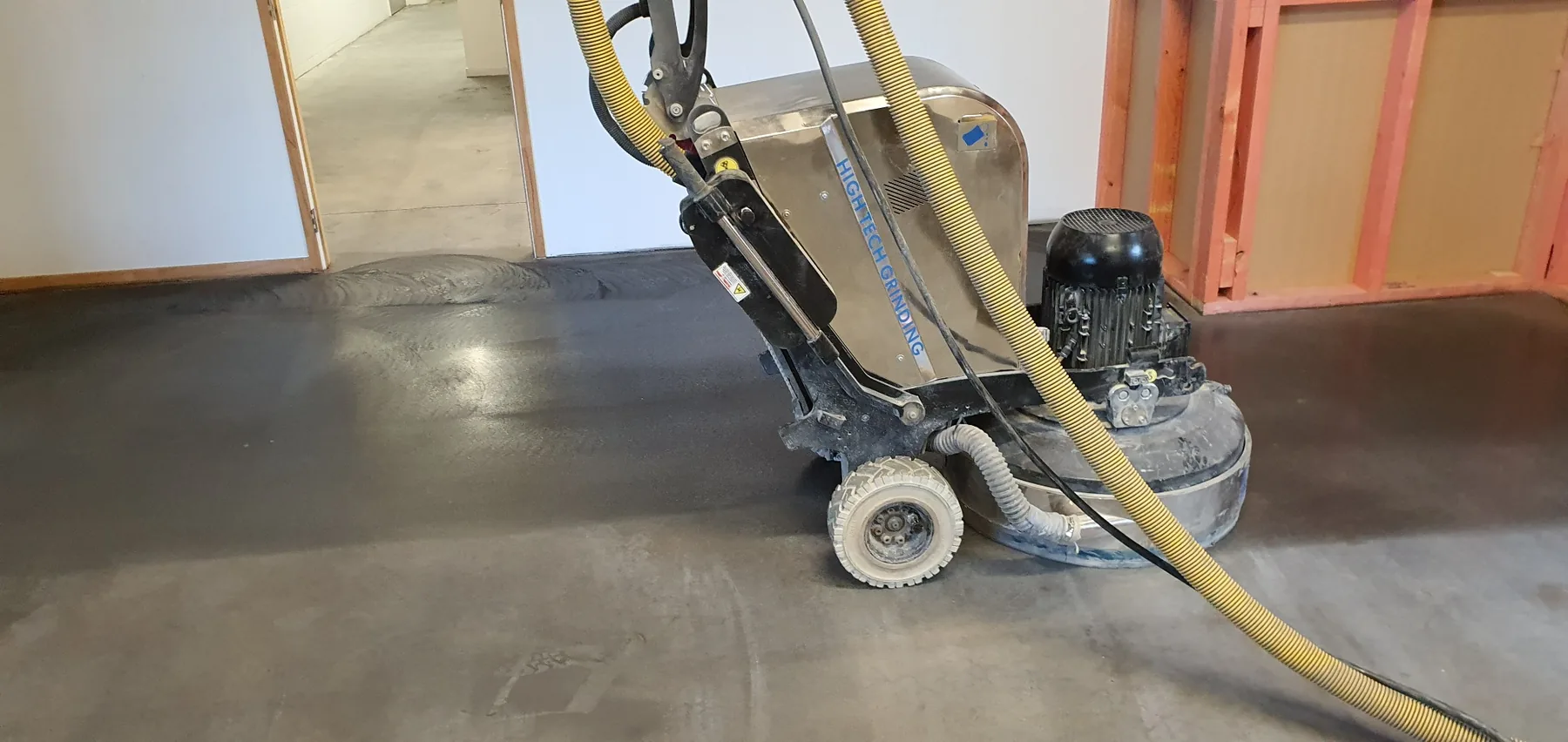
Diamond grind
Remove surface contamination, weak material, old coatings where specified and create the profile the resin needs.
Cracks, joints, spalls
Repair defects, usually with fast-cure high-strength low-viscosity polyurea repair resin.
Mechanical key
The low-viscosity repair resin penetrates irregularities in the sides of cracks rather than just sitting over the surface.
Grind repairs flush
Bring repaired areas back into the plane of the floor.
Vacuum thoroughly
Remove grinding dust and clean the open pores before primer, moisture barrier or coating.
Our grinders are connected directly to professional dust extractors.
Diamond grinding creates fine concrete dust. We use high-capacity dust extraction equipment connected directly to the grinders to help control dust while we work and keep the preparation process cleaner.
$20/m² + GST is a normal starting point, not a promise for every floor.
Preparation rises where we need additional grinding to remove coatings, glue, contamination or high areas. Floors that require flattening or extensive repair can consume significantly more labour and tooling than a clean bare slab.
Why this part matters.
Why diamond grind instead of acid etching?
Diamond grinding mechanically removes contamination and weak surface material while creating a controlled profile. It also gives us the ability to remove existing coatings and flatten local high areas where required.
What happens to crack repairs before coating?
Repairs are allowed to cure then diamond ground flush so the coating is applied over a clean, mechanically prepared surface.
Get the right system for the floor.
You don't need to know the exact area or which resin system you need. Give us the basics and we'll narrow down the suitable options.